
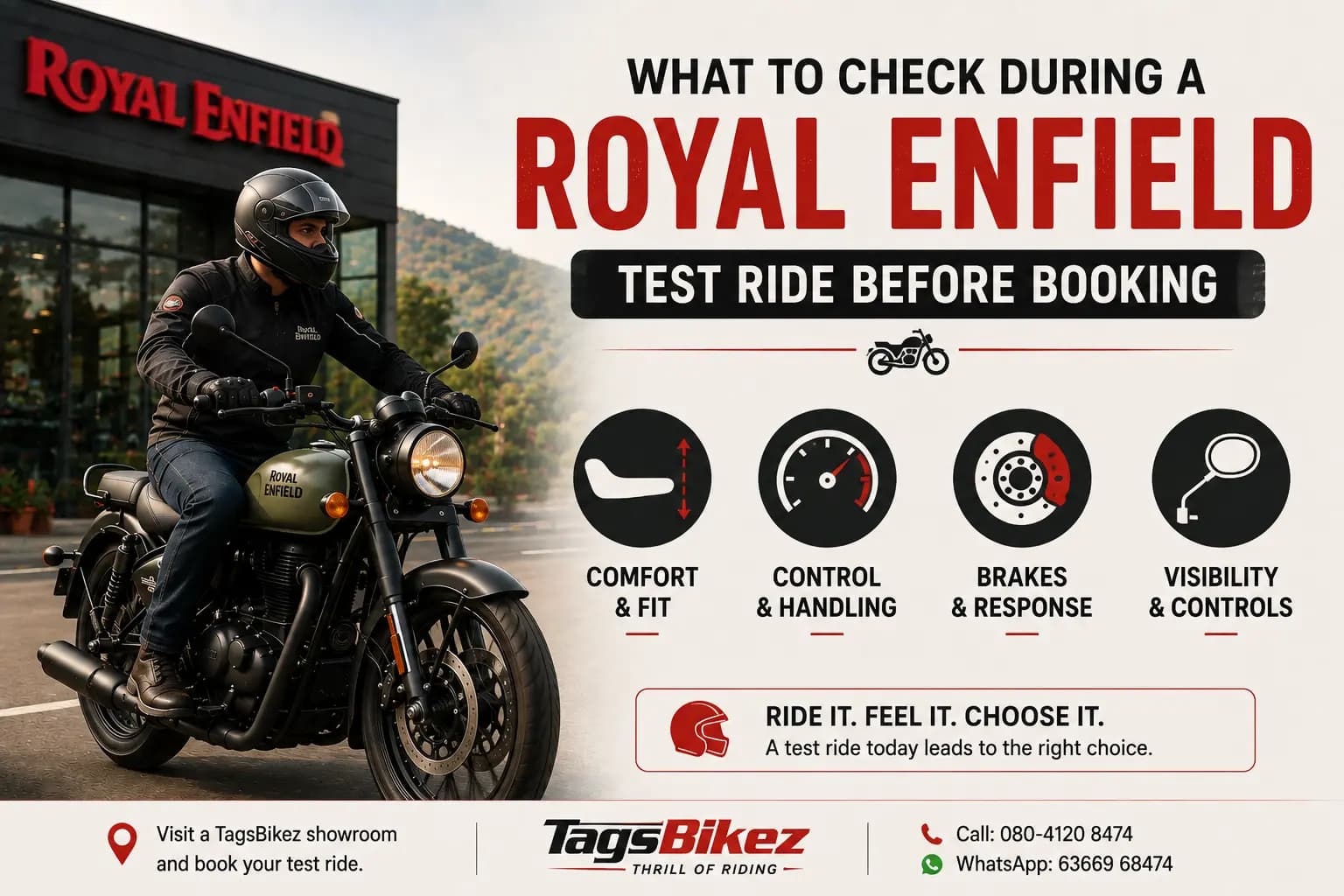
A motorcycle may look right in photographs and seem impressive on paper, yet feel completely different once you sit on it. Seat width, handlebar reach, weight distribution and clutch effort are difficult to judge through specifications or reviews alone. A Royal Enfield test ride before booking helps you understand how the motorcycle fits your body, experience and everyday requirements. Instead of concentrating only on engine sound or acceleration, use the ride to evaluate comfort, control, visibility, braking and low-speed confidence.
Be Clear About How You Will Use the Motorcycle Think about your regular riding before visiting the showroom. Will the motorcycle be used mainly for office travel, short city trips, highway touring or weekend rides? Will you often carry a pillion or luggage? A motorcycle that feels relaxed on an open highway may require more effort in narrow streets, crowded parking areas or stop-and-go traffic. Your test ride should therefore reflect the conditions you are likely to face regularly. Share these requirements with the showroom team. It will help them suggest models that match your intended use rather than simply directing you towards the most popular option.
Check the Weight and Balance Before Moving Do not start the engine immediately. First, sit on the motorcycle and take it off the side stand. Hold it upright and move it a short distance manually where permitted. A motorcycle’s published weight does not tell the whole story. Seat height, handlebar position and weight distribution influence how manageable it feels. A heavier motorcycle may feel well balanced once moving, but you should also be comfortable handling it at traffic signals and while parking.
Evaluate Seat Height and Foot Reach Check how securely your feet reach the ground. You do not necessarily need to place both feet completely flat, but you should feel stable while stopping and starting. Seat height figures alone can be misleading because seat width also affects leg reach. A narrow seat may feel more accessible than a wider seat with a similar listed height. Try placing one foot firmly on the ground while keeping the other on the footpeg. Think about how this would feel on a sloping road, loose gravel or an uneven roadside. Wear the type of footwear you normally use for riding so the test feels realistic.
Observe the Riding Position Once seated, check the relationship between the handlebar, seat and footpegs. Your shoulders should not feel stretched, and your wrists should not carry unnecessary pressure. Pay attention to: ● Knee position ● Handlebar reach ● Back angle ● Footpeg placement ● Seat support ● Shoulder comfort A slightly uncomfortable posture may not seem important during the first few minutes. However, it can become tiring during daily commuting or a long weekend ride. Spend enough time in the riding position before deciding that it suits you.
Test Low-Speed Manoeuvrability Low-speed handling matters more in daily ownership than many buyers expect. During the approved test-ride route, check how the motorcycle behaves while starting from a stop, moving slowly and making a safe U-turn. Notice whether the steering feels natural and whether you can maintain balance without excessive effort. Also consider how easily you could guide the motorcycle through traffic, approach a speed breaker or enter a tight parking space. Do not attempt risky turns or manoeuvres. The purpose is to assess normal usability, not test the motorcycle’s limits.
Check the Clutch and Gearshift Feel Clutch comfort can make a noticeable difference when riding through busy traffic. Check whether the lever is easy to reach and whether its effort feels manageable during repeated use. Observe how smoothly the motorcycle begins moving as you release the clutch. Gear changes should feel understandable and predictable, although the exact character can vary between models. Try selecting neutral when safely stopped. Think about whether you would be comfortable operating the clutch and gearbox during your normal commute, especially if the route includes frequent traffic signals.
Understand the Engine Response Rather than accelerating aggressively, observe how smoothly the motorcycle responds when you open and close the throttle. Check whether it moves comfortably at lower speeds and whether the power delivery feels suitable for your experience. Shift through the available gears within the approved route and legal conditions. Also notice the heat and vibrations reaching your feet, legs, hands and seat. Some engine character is expected, but comfort is personal. What feels enjoyable to one rider may become tiring for another during longer use.
Test Braking and Suspension Comfort Apply the brakes gradually in a safe area and notice whether the response feels predictable. You should be able to reduce speed confidently without the brakes feeling difficult to judge. There is no need to perform sudden emergency stops during a showroom test ride. Instead, assess ordinary braking while approaching junctions, speed breakers and slow-moving traffic. When the route allows, notice how the suspension handles road joints, small potholes and uneven sections. A firmer setup may provide greater feedback, while a softer setup may feel more comfortable. Consider how the motorcycle might behave with a pillion or luggage as well.
Check Mirrors, Controls and Instrument Visibility Adjust the mirrors before starting. They should provide a useful view behind you without requiring an awkward shoulder or head position. Check whether you can easily reach the indicators, horn, headlamp controls and other switches. The instrument display should remain visible in your normal seating position. You should not need to look down for long periods to operate basic controls. Clear control placement becomes especially important in traffic, rain or unfamiliar surroundings.
Consider Pillion Comfort When you regularly travel with a passenger, do not evaluate only the rider’s seat. Check the size and shape of the pillion seat, footpeg position, grab-rail access and ease of getting on and off. Ask whether a pillion assessment is allowed under the showroom’s test-ride rules. Even sitting together on the stationary motorcycle can help you understand available space and balance. Also consider whether adding luggage, a backrest or another accessory would reduce passenger comfort.
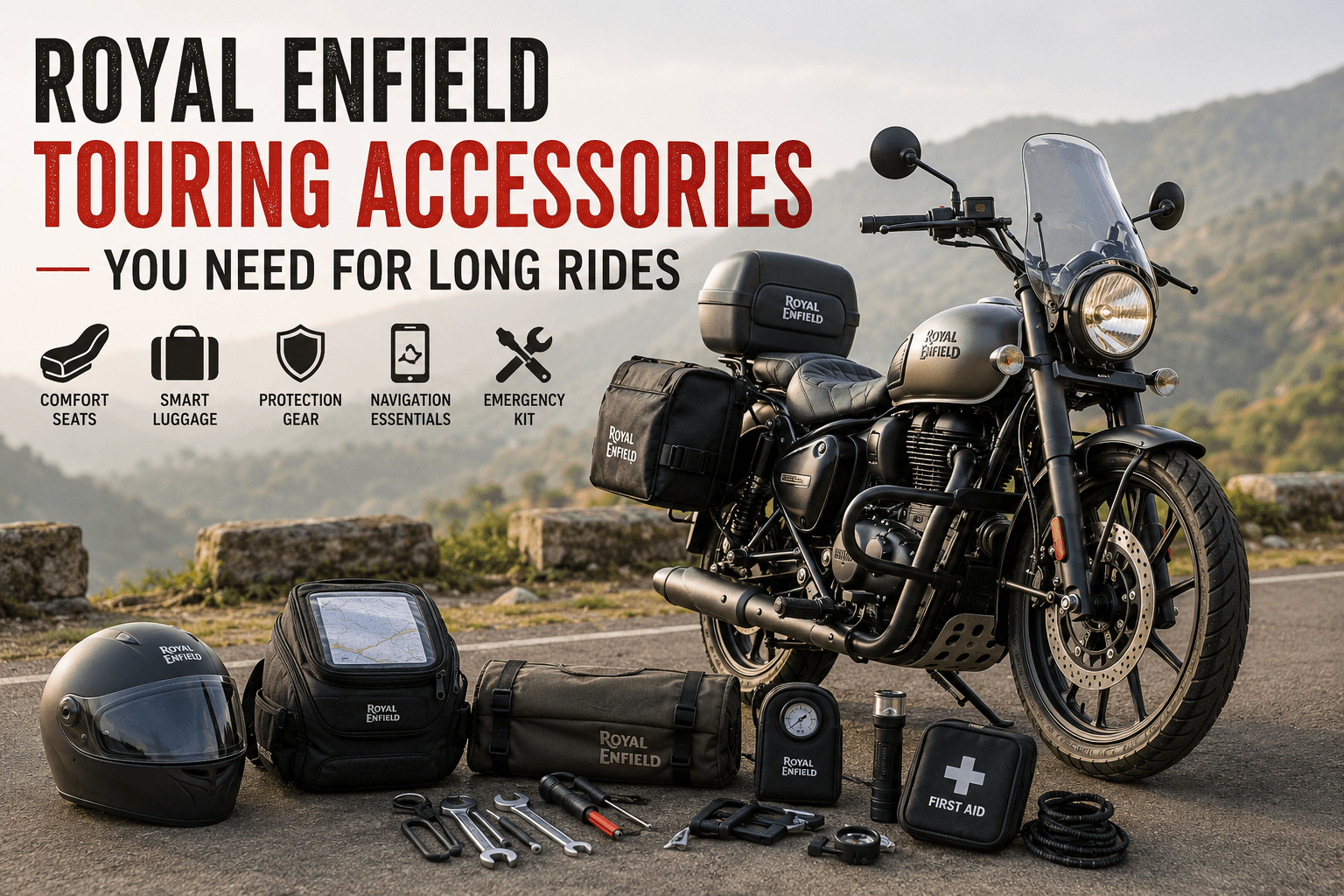
Ask About Compatible Accessories Evaluate the standard motorcycle first. Accessories should solve a genuine need rather than compensate for a model that does not suit you. You can ask the showroom team about: ● Touring seats ● Engine guards ● Windscreens ● Luggage racks ● Saddlebags or panniers ● Backrests ● Navigation accessories Availability and compatibility can differ by motorcycle and variant. Confirm whether installation requires an authorised technician and whether adding the accessory changes seating, balance or luggage capacity.
Compare More Than One Model When you are choosing between two motorcycles, test ride both as close together as possible. This makes differences in weight, posture, clutch effort and handling easier to recognise. Compare them according to your real priorities. A compact motorcycle may feel easier in city traffic, while another model may offer the posture or luggage options you prefer for touring. There is no single Royal Enfield model that is ideal for every rider. Royal Enfield’s current Indian website lists multiple roadster, cruiser and adventure motorcycles, with test-ride options available for individual models.
Questions to Ask Before Booking Once the ride is complete, ask the showroom team for clear information about: ● Variant and colour availability ● On-road price components ● Insurance and registration charges ● Booking terms ● Expected delivery timeline ● Warranty information ● Service schedule ● Finance or exchange options ● Compatible genuine accessories Prices, colours, stock and delivery estimates can change, so confirm the current information directly before paying a booking amount. TagsBikez allows customers to enquire about test rides through its website, phone or WhatsApp. Its showroom pages also advise riders to carry a valid driving licence and confirm availability before visiting.